
THE WILDLIFE FORENSIC SYMPOSIUM 2027
RESEARCH | CONSERVATION | LAW ENFORCEMENT
4-6 March 2027
Advancing Wildlife Forensics Through Collaboration, Innovation and Research
Join researchers, practitioners, students, conservation professionals, law enforcement agencies, veterinarians, forensic scientists, legal experts, policymakers, and industry leaders for the Wildlife Forensic Academy Symposium 2027, taking place in March 2027 at the Wildlife Forensic Academy, Cape Town, South Africa.
Over three days, the symposium will bring together experts from diverse disciplines to share cutting-edge research, innovative technologies, practical case studies, and collaborative approaches to tackling wildlife crime and strengthening wildlife conservation.
3-Day Symposium Programme
The symposium will include:
Two days of scientific presentations, featuring oral and poster presentations from researchers and professionals working across wildlife forensics and related disciplines.
One day of practical workshops comprising of five interactive sessions covering a variety of forensic topics and specialist techniques, offering hands-on learning, exposure to emerging technologies, and insight into current challenges in the field. Delegates can select to attend one morning and one afternoon workshop session.
-
This workshop covers crime scene reconstruction using the scientific method, physical evidence, and deductive reasoning to determine what happened, how, where, when, why, and who was involved. It outlines the investigation, analysis, and reconstruction phases, team roles (leader, photographer, fingerprint expert, specialists), and the one-shot process of assessing, documenting, searching, collecting, and processing evidence. Key elements include walk-throughs, standard search patterns, photography and sketching techniques, evidence collection protocols, chain of custody, and the importance of thorough documentation for court presentation. With all the information provided to the teams, they are then tasked with going to the specific scenes in a competitive game format to apply what they have learned. A winning team is announced once the final evidence has been submitted and accepted by the board game master.
-
Understanding how animals decompose and how post-mortem changes can provide valuable evidence is an important aspect of wildlife forensic investigations. This half-day practical workshop introduces participants to the principles of forensic entomology and wildlife veterinary forensics, exploring how insect evidence and post-mortem examination can contribute to estimating time since death and determining the cause of death in wildlife. Participants will be introduced to decomposition ecology, insect collection and identification techniques, as well as the interpretation of entomological evidence through practical demonstrations and case studies. The workshop will also explore the veterinary aspects of wildlife crime, including wildlife injury assessment, first aid, poisoning and the veterinary considerations relevant to the illegal wildlife trade. Hands-on activities will include collecting insects, applying entomological evidence to a case study, and practical wildlife post-mortem examination. Participants will develop an understanding of how these complementary forensic approaches can support wildlife crime investigations, as well as the importance of appropriate evidence collection and interpretation.
-
Hair is an often-overlooked form of trace evidence that can provide valuable information in wildlife crime investigations. This half-day practical workshop introduces participants to the principles of hair morphology for species identification, exploring how microscopic characteristics can assist in distinguishing animal species and interpreting trace evidence. Participants will be introduced to key morphological features used in the systematic examination of hair, as well as the importance of developing appropriate reference material through standardised sampling. The workshop will include hands-on exercises, with a particular focus on sampling methods. Participants will also develop an understanding of how hair evidence can contribute to wildlife forensic investigations and the limitations of morphological identification.
-
The workshop explains fingerprint identification as a reliable, lifelong method of personal identification based on unique friction ridge patterns that form in the womb and remain unchanged except for deep scarring or disease. It covers skin structure, ridge features, the three basic patterns, and the ACE-V process of analysis, comparison, evaluation and verification. Identification requires matching corresponding ridge features with no unexplained differences. The workshop also details latent print development using powders and chemical methods, together with the use of alternative light sources and photography techniques for different surfaces.
-
This three-hour workshop will combine practical tracking exercises, a presentation on environmental threats, and practical activities focused on short-term survival. The session will also include a guided garden walk exploring succulent plant poaching, medicinal plants, and local ecology.
An optional Symposium Dinner on the first evening, offering delegates the opportunity to network with colleagues, speakers, and professionals in an informal setting.
Further details on the programme will be announced closer to the event.

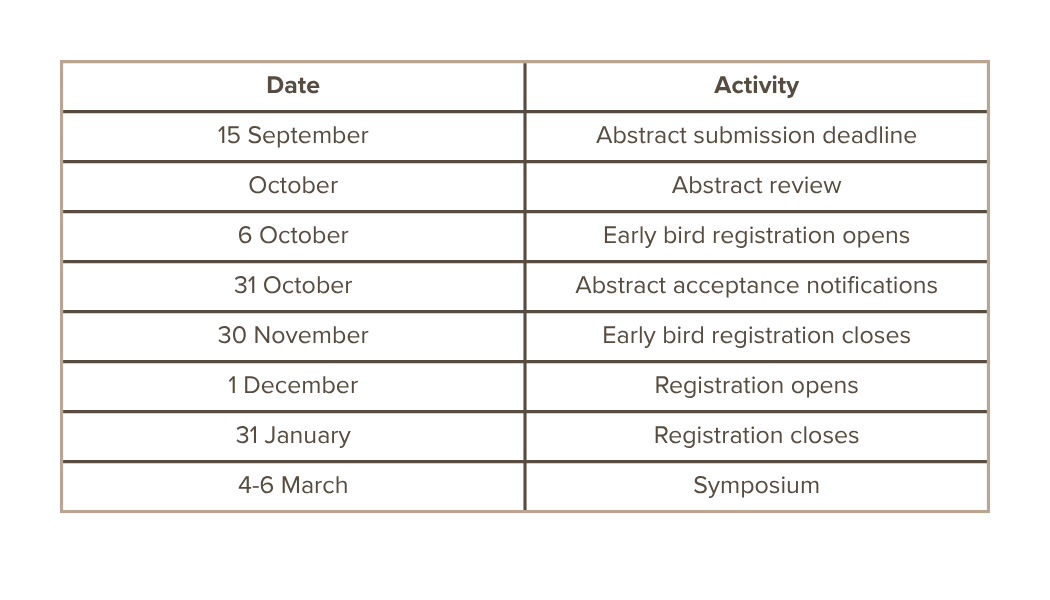
Important Dates

DELEGATE REGISTRATION
International in-person delegate: R2500
Local (South African) in-person delegate: R1500
Student in-person delegate: R750
Additional workshop attendance: R450/ workshop (Maximum of two workshops can be attended)
Online attendance: R750
Conference dinner: R400 (includes South African braai buffet and welcome drink)
*Please note online attendance only spans the first two days of the conference and not the workshop day
Early bird discount: 10% off registration fees until November 30th, 2026
Early bird registrations NOW OPEN
Included in Registration Fee:
Morning: Tea and coffee
Daily platter-style lunch
Afternoon: Tea and coffee
Excluded from Registration Fee:
Daily breakfast
Accommodation
Daily dinners (Attendance to the conference dinner on the first evening is an option extra than can be selected on the registration form)
Transport to and from the conference venue
CONFERENCE SPONSORS

-
ZooOmics is the animal genetics division of Inqaba Biotec, a leading South African biotechnology company specialising in genomics and molecular biology. ZooOmics provides reliable DNA testing services for wildlife, livestock and companion animals across sub-Saharan Africa, including DNA profiling, parentage verification, and genetic health testing. In addition to its laboratory services, Inqaba Biotec supplies a wide range of molecular biology reagents, kits and laboratory consumables to support the needs of laboratories and researchers.
Join the Conversations
The Wildlife Forensic Symposium provides a unique platform to showcase research, exchange knowledge, build collaborations, and contribute to solutions that address the increasingly complex challenges facing wildlife conservation and wildlife crime.
Whether you are an established professional, early-career researcher, postgraduate student, or practitioner working in a related field, we encourage you to share your work and become part of this multidisciplinary community.